What Is Freemium and How Can It Grow Your Business Fast?

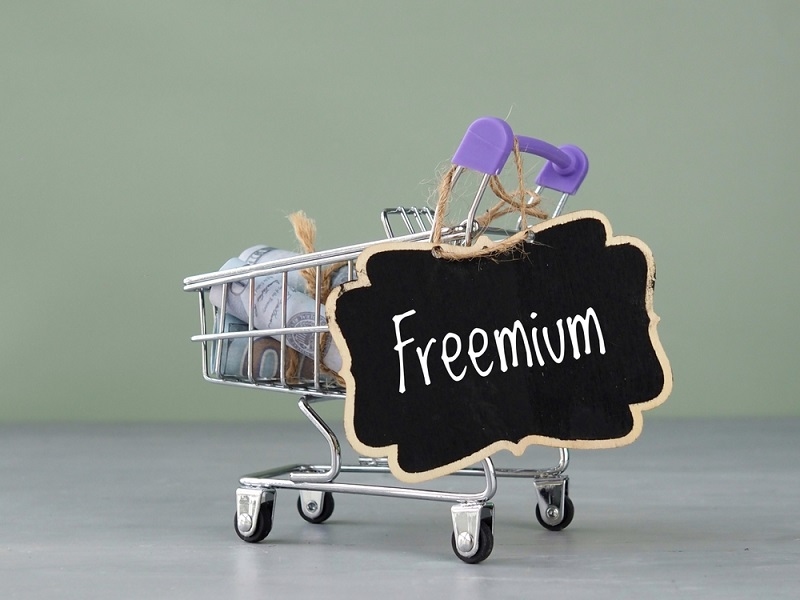
What if your best sales strategy was to never ask for a sale? Sounds crazy, right? But Spotify, Slack, and Dropbox built multi-billion dollar empires doing exactly that. They handed their core product over for free, grew enormous user bases, and converted a slice of those users into loyal paying customers.
That right there is the freemium model doing its job. Most people think freemium is about being generous. It is not. It is a calculated growth move. It only works once you stop seeing it as a pricing choice and start seeing it as a customer acquisition engine. Stick around, and you will learn what freemium actually is, how it works, and why the smartest companies in the world still bet on it.
What Is Freemium?
So what is freemium, really? At its core, freemium gives users access to a basic version of a product at zero cost. If they want more features or higher limits, they pay a recurring fee to unlock them. Simple concept, powerful execution.
This idea is older than most people realize. Back in the early 1980s, software developers shipped basic program versions on floppy disks. Anyone could try the software without spending money, but the full experience is behind a purchase. Same logic, different decade. What changed today is just the speed. Going from free to paid now takes a single click.
How Does a Business With a Freemium Model Make Money?
Free does not mean broke. Most freemium businesses earn when users hit a limit and decide the upgrade is worth it. That is the core conversion moment. Beyond that, some run ads on free accounts, others create two or three paid tiers at different price points. None of these paths requires a massive sales team. What they do require is a big enough user base so that even a fraction of people paying regularly keeps the whole thing moving forward.
Freemium vs. Free Trial
These two get mixed up constantly, but they work in completely different ways.
With a free trial, users get the full product for a short window, usually somewhere between one and four weeks. When that window closes, they either pay up or lose access. The freemium model flips that script. Users get a limited version and keep it as long as they want, no clock ticking over their heads.
Here is a quick side-by-side look:
| Freemium | Free Trial | |
| Access level | Limited features, forever | Full features, limited time |
| Conversion urgency | Low | High |
| Best for | Habit-forming tools | Complex software |
| User commitment | Higher on conversion | Varies |
Trials push people toward faster decisions. Freemium builds slow, sticky habits. If your product needs full exposure to prove its worth, go with a trial. If it has clean feature tiers where basic and advanced are clearly different, freemium fits better. Either way, the model you pick shapes how you build an effective sales process, so choose based on what your product actually needs, not what sounds good on paper.
Does the Freemium Model Work? Here Is Why It Does
Does the freemium model work? It does, but the reasons go deeper than "free things attract people." Here are the four structural advantages that make it powerful.
It Cuts Your Customer Acquisition Costs
Running paid ads gets expensive fast. Freemium, once your product is built, costs almost nothing to scale. The product becomes its own marketing channel. People show up because there is no risk, and they stay because the product delivers.
It Builds Habits That Stick
Strip away the cost barrier, and you strip away hesitation. Users try the product casually, come back a few more times, and before long, it is just part of their routine. At that point, switching to a competitor feels like unnecessary work. That daily habit is exactly the ground you want to stand on when you pitch the upgrade.
Free Users Spread the Word
Satisfied free users talk. They bring your product into team meetings, recommend it to friends, and share it in group chats. You are getting real organic marketing from people who have not paid you anything yet. That kind of reach is genuinely hard to buy.
Upselling Beats Cold Outreach Every Time
A free user already knows your product. They use it, they trust it, and they have built habits around it. Selling them a paid plan is a completely different conversation from trying to convert a stranger. This is also a big part of how a business with a freemium model makes money without burning through a massive sales budget.
Where the Freemium Model Goes Wrong
Understanding how a business with a freemium model makes money also means knowing where things fall apart. The freemium model is not foolproof, and these are the three places it breaks down most often.
Giving Away Too Much
If free users never bump into a limitation, they never feel a reason to upgrade. A solid free tier solves a real problem. A smart free tier leaves users wanting just a little more.
Getting the Feature Split Wrong
This one takes ongoing work to get right. Too little value in the free version, and nobody signs up. Too much, and nobody upgrades. The goal is a free product people genuinely rely on, paired with a paid tier that makes their experience noticeably better.
Running Out of Runway
Freemium is a slow burn. Conversions do not happen overnight, and supporting a large free user base costs money. Businesses that treat freemium as a quick revenue fix tend to run out of patience or cash before the model pays off.
Companies With Freemium Models That Got It Right
Looking at real companies with freemium models is the fastest way to see the strategy in action. These three are the most cited examples for good reason.
- Dropbox kept the free tier simple: a limited storage cap. When users filled it up, the next step was obvious. No hard sell needed. The product created the upgrade moment naturally.
- Slack spread through organizations one team at a time. Because it is a communication tool, each new user pulls others along. That built-in network effect made free adoption fast and surprisingly organic. It is one of the best examples of companies with freemium models using product design to drive growth.
- Spotify ran ads on free accounts. Those ads brought in some direct revenue, but more importantly, they made the paid experience feel like a relief. Every ad break was a quiet reminder of what upgrading would feel like. Smart and simple.
Conclusion
The freemium model is not charity. It is a long-term bet that if enough people genuinely love your product for free, a portion of them will eventually pay for more.
The businesses that win here are not the most generous. They are the most intentional. They build free tiers that pull people in and paid tiers that are clearly worth the jump. That kind of thinking also feeds into building a positive sales culture internally, where the product does the heavy lifting and your team focuses on serving users who are already halfway sold.
If you are considering freemium, ask yourself one honest question first: Is your free product something people would actually use every single day without paying? If yes, you have something real to build on.
FAQs
What is freemium, and how does it differ from a fully free product?
With a freemium product, users get a basic version for free and have the option to pay for more. A fully free product gives everything away with no upgrade path at all. Freemium is built around that upgrade moment. There is always a paid tier sitting above the free one, designed to offer something the free version simply does not.
How does a business with a freemium model make money?
Honestly, it comes down to a few different paths. The biggest one is getting free users to eventually pay for more. Some companies run ads on their free tier and pull revenue that way. Others stack multiple paid plans so users can choose how much they want to spend. The real strength shows up when you have a large enough user base that even a small number of upgrades keeps the business growing steadily month after month.
Does the freemium model work for every type of business?
Honestly, no. It suits digital products best, things like apps and software, where adding another free user costs almost nothing extra. For businesses where each user has a meaningful cost attached, supporting a large free base gets difficult fast. It also only works when there is a clear, honest gap between what the free tier offers and what the paid tier delivers. Without that gap, the upgrade never feels worth it.
This content was created by AI